Festive Herb Roast Turkey
Highlighted under: Spring Recipes
I absolutely love preparing a Festive Herb Roast Turkey during the holiday season! The aroma of fresh herbs fills my kitchen, creating an inviting atmosphere for family and friends. This recipe elevates a traditional turkey with a medley of rosemary, thyme, and sage, bringing out the rich flavors of the bird. I find that marinating the turkey overnight makes a significant difference in taste and juiciness. It's a dish that never fails to impress and is perfect for gatherings or intimate dinners alike.
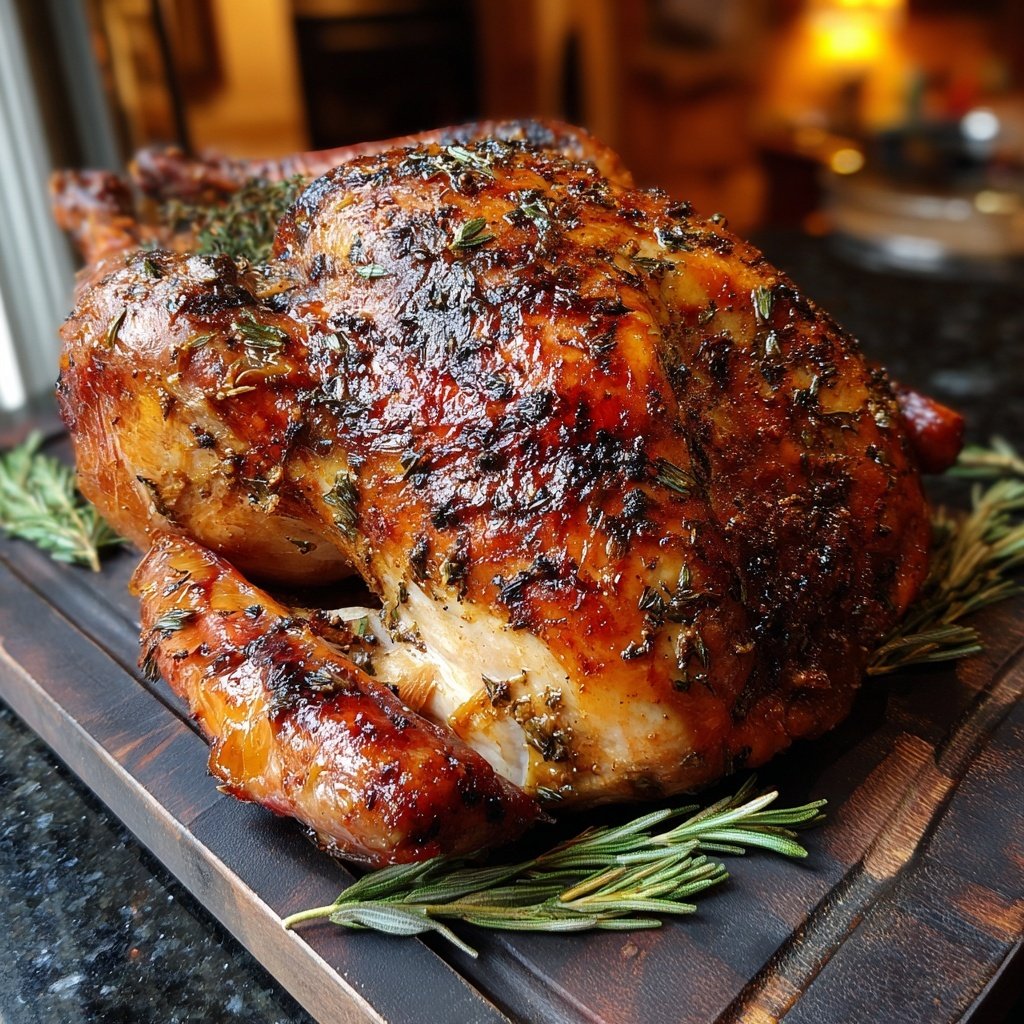
As I crafted my Festive Herb Roast Turkey this past holiday season, I experimented with different herb combinations and finally settled on a blend that truly captured the essence of Thanksgiving. The lively flavors of rosemary and thyme work harmoniously, and the turkey remains moist and succulent throughout the roasting process. I’ve also found that allowing the turkey to rest before carving helps retain its juiciness, which is a crucial step!
Some friends were skeptical about the lengthy cooking time, but I reassured them that slow roasting enhances the flavors and results in a beautifully golden skin. I recommend checking the internal temperature regularly to avoid overcooking. Every time I serve this roast, it leaves my guests raving for more!
Why You Will Love This Recipe
- Aromatic blend of herbs elevates your holiday table
- Juicy and tender turkey that’s bursting with flavor
- Perfect for impressing guests and family gatherings
Why Marinating is Key
Marinating the turkey overnight not only enhances its flavor but also contributes to a juicier final product. By allowing the herb mixture to permeate the meat, you get bursts of fresh herb notes in every bite. I recommend placing the rubbed turkey in a large plastic bag, squeezing out excess air before sealing it, and leaving it in the refrigerator. This method helps the flavors develop and infuse more effectively than a shorter marination time.
If you’re short on time, even marinating for a couple of hours can be beneficial. However, for the best result, aim for a 12 to 24-hour marination. This time frame allows the salt to subtly break down the proteins, leading to an exceptionally tender turkey. Don't forget to take it out of the fridge about 30 minutes before roasting to ensure even cooking.
Importance of Basting
Basting your turkey throughout the roasting process is crucial for achieving a golden, crispy skin. Every 30 minutes, use a baster or a ladle to spoon the juices from the bottom of the roasting pan over the turkey. This not only keeps the meat moist but also promotes even browning. I suggest checking the pan regularly to ensure enough broth remains; adding more if it gets too low ensures the turkey remains juicy.
When basting, avoid opening the oven door too frequently, as this can lower the oven temperature and extend cooking time. Instead, quickly baste and close the door promptly. You’ll know your turkey is on the right track when the skin starts turning a lovely golden brown, indicating that it's roasting beautifully.
Ideal Serving Suggestions
To make the most of your Festive Herb Roast Turkey, consider serving it with seasonal sides that complement its rich flavors. Traditional accompaniments like roasted root vegetables, garlic mashed potatoes, or a fresh cranberry sauce can elevate your meal. I also love adding a side of stuffing made with crusty bread and the same herbs used in the turkey to create a cohesive flavor profile across the meal.
For a festive touch, garnishing your turkey with fresh herbs like rosemary and thyme or slices of citrus not only adds visual appeal but also highlights the aromatic flavors you’ve infused. Don’t forget to save the carcass for broth; simmering it with leftover vegetables can produce a delicious base for soups!
Ingredients
Gather the following ingredients to prepare your Festive Herb Roast Turkey:
For the Turkey
- 1 whole turkey (12-14 pounds)
- 1/4 cup olive oil
- 2 tablespoons sea salt
- 1 tablespoon black pepper
- 4 cloves garlic, minced
- 1 tablespoon fresh rosemary, chopped
- 1 tablespoon fresh thyme, chopped
- 1 tablespoon fresh sage, chopped
- 1 lemon, quartered
- 1 onion, quartered
- 2 cups low-sodium chicken broth
Make sure to use fresh herbs for the best flavor!
Instructions
Follow these steps to achieve a perfectly roasted turkey:
Prepare the Turkey
Preheat your oven to 325°F (165°C). Remove the turkey giblets and pat the turkey dry with paper towels. In a bowl, mix olive oil, salt, pepper, garlic, rosemary, thyme, and sage to create a herb mixture. Rub this mixture under the turkey's skin and all over the exterior.
Stuff the Turkey
Stuff the cavity with lemon and onion quarters, ensuring you do not pack it too tightly. Place the turkey on a roasting rack in a large roasting pan.
Roast the Turkey
Pour chicken broth into the bottom of the pan. Roast the turkey in the preheated oven for about 3 hours, or until the internal temperature reaches 165°F (75°C) when checked in the thickest part of the thigh. Baste the turkey every 30 minutes for even browning.
Rest and Serve
Once done, remove the turkey from the oven and let it rest for 20-30 minutes before carving. This allows the juices to redistribute, ensuring each slice is succulent.
Serve with your favorite sides for a festive feast!
Pro Tips
- For extra flavor, consider adding apple and herbs to the cavity along with the lemon and onion. This adds a subtle sweetness to the turkey as it roasts.
Ingredient Substitutions
If you find yourself lacking fresh herbs, dried versions can be used in a pinch. The general rule is to use about one-third of the amount when substituting dried herbs for fresh. Keep in mind that the flavor profile may be slightly different, but the dish can still be delightful. For instance, if you don't have sage, try using parsley or a bit of Italian seasoning instead.
Olive oil can be swapped for melted butter for a richer flavor, especially if you're aiming for a more traditional turkey taste. Alternatively, if you're looking for a lighter option, avocado oil works well, and it can handle high heat without smoking.
Make-Ahead Tips
You can prepare some elements of this recipe in advance to reduce the stress on the big day. Chop and mix your herbs and seasonings the night before, storing them in an airtight container. This allows the flavors to meld and ensures that your preparation is quick and efficient when it's time to cook the turkey.
If you have leftover turkey, it can be stored in the fridge for up to four days. Alternatively, you can freeze leftover slices for up to three months. Just make sure to vacuum seal it or wrap it tightly in plastic wrap to avoid freezer burn, keeping its flavor intact for your next meal.
Troubleshooting Cooking Issues
If your turkey doesn’t seem to be browning evenly, check the positioning in your oven. Ideally, the turkey should be placed in the center of the oven where heat circulation is best. If you notice certain areas starting to brown too quickly, tent them with aluminum foil to prevent burning while the rest continues cooking.
To avoid overcooking and ensure juiciness, invest in a meat thermometer. Check the thickest part of the thigh and breast, ensuring it reaches 165°F (75°C). If you pull it out at about 160°F (71°C) and let it rest, it will continue to cook, reaching the ideal temperature without drying out.
Questions About Recipes
→ Can I prepare the turkey a day in advance?
Yes, you can prep the turkey and apply the herb mixture a day before and keep it in the refrigerator.
→ What's the best way to store leftovers?
Store leftover turkey in an airtight container in the refrigerator for up to 4 days.
→ How do I know when the turkey is done?
Use a meat thermometer to check the internal temperature; it should read at least 165°F (75°C).
→ Can I use dried herbs instead of fresh?
Yes, but use less, since dried herbs are more concentrated. About 1 teaspoon of dried herbs equals 1 tablespoon of fresh.
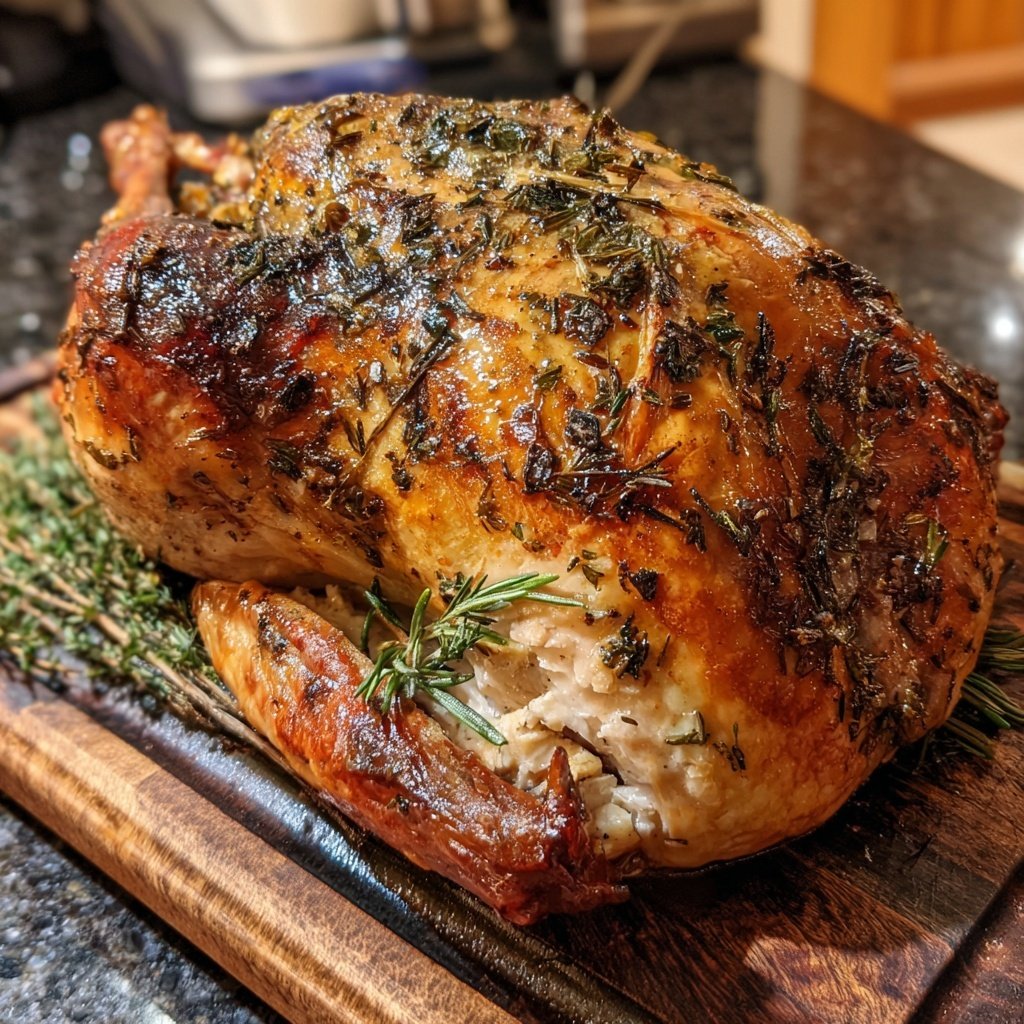
Festive Herb Roast Turkey
Created by: The Chefianfoods Team
Recipe Type: Spring Recipes
Skill Level: Intermediate
Final Quantity: 8-10 servings
What You'll Need
For the Turkey
- 1 whole turkey (12-14 pounds)
- 1/4 cup olive oil
- 2 tablespoons sea salt
- 1 tablespoon black pepper
- 4 cloves garlic, minced
- 1 tablespoon fresh rosemary, chopped
- 1 tablespoon fresh thyme, chopped
- 1 tablespoon fresh sage, chopped
- 1 lemon, quartered
- 1 onion, quartered
- 2 cups low-sodium chicken broth
How-To Steps
Preheat your oven to 325°F (165°C). Remove the turkey giblets and pat the turkey dry with paper towels. In a bowl, mix olive oil, salt, pepper, garlic, rosemary, thyme, and sage to create a herb mixture. Rub this mixture under the turkey's skin and all over the exterior.
Stuff the cavity with lemon and onion quarters, ensuring you do not pack it too tightly. Place the turkey on a roasting rack in a large roasting pan.
Pour chicken broth into the bottom of the pan. Roast the turkey in the preheated oven for about 3 hours, or until the internal temperature reaches 165°F (75°C) when checked in the thickest part of the thigh. Baste the turkey every 30 minutes for even browning.
Once done, remove the turkey from the oven and let it rest for 20-30 minutes before carving. This allows the juices to redistribute, ensuring each slice is succulent.
Extra Tips
- For extra flavor, consider adding apple and herbs to the cavity along with the lemon and onion. This adds a subtle sweetness to the turkey as it roasts.
Nutritional Breakdown (Per Serving)
- Calories: 350 kcal
- Total Fat: 20g
- Saturated Fat: 5g
- Cholesterol: 120mg
- Sodium: 900mg
- Total Carbohydrates: 0g
- Dietary Fiber: 0g
- Sugars: 0g
- Protein: 40g